Omnicar
Short Circuiting Petro Modernity
Special thanks to Florian Sattler, Martin Glasner and Lukas Kobel
What if a car refused to start unless it was shared? By embedding cooperation directly into the ignition system, this project turns my car into an infrastructure for collective mobility.
Growing up in the countryside as the son of what I would call fossil nomads—parents who spent hours commuting each day by car—private automobility was not a lifestyle choice but a necessity. Today, living in the city and participating in a car pool, I experience another facet of mobility: sharing as everyday practice. Omnicar emerges from this tension between dependence and possibility.
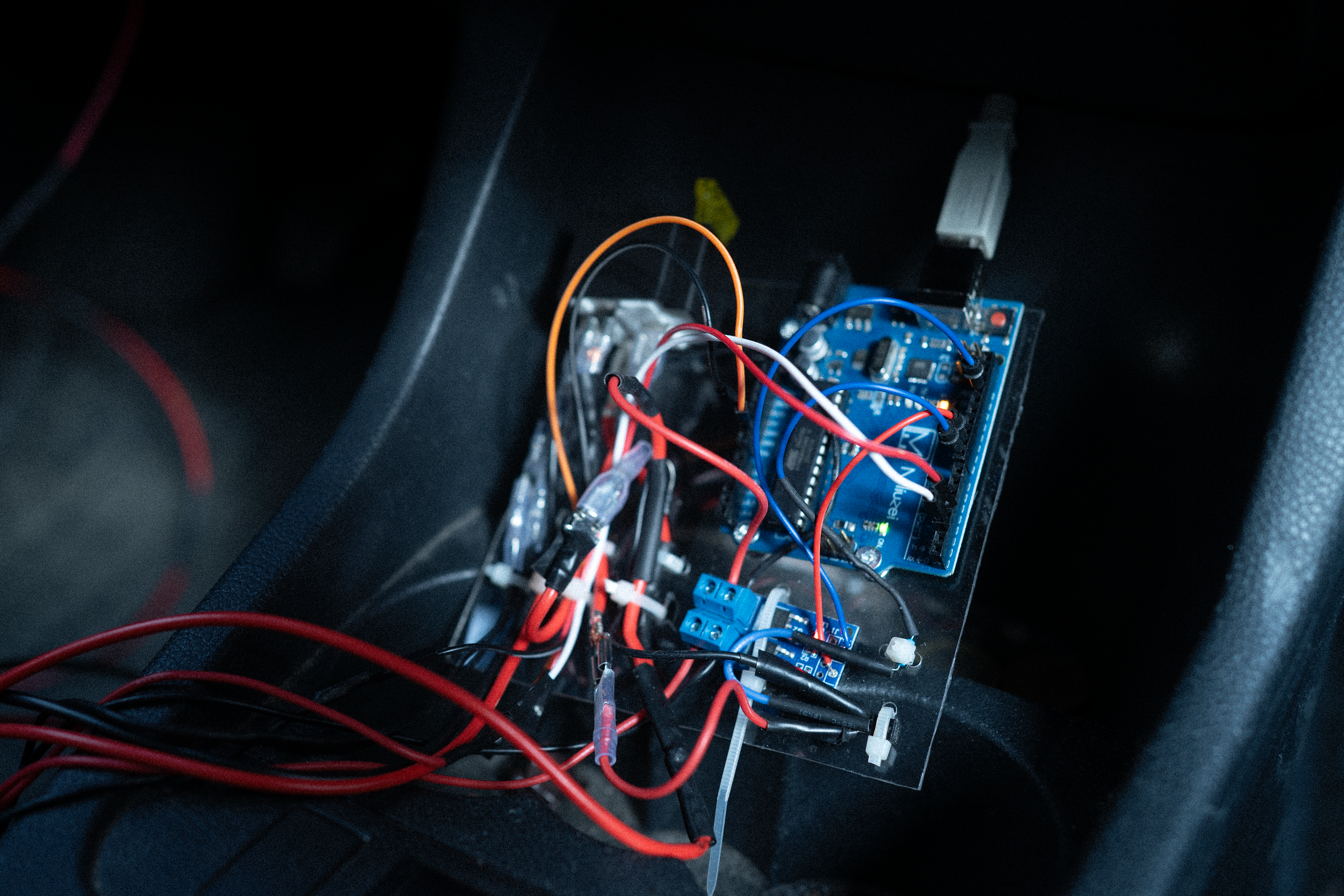
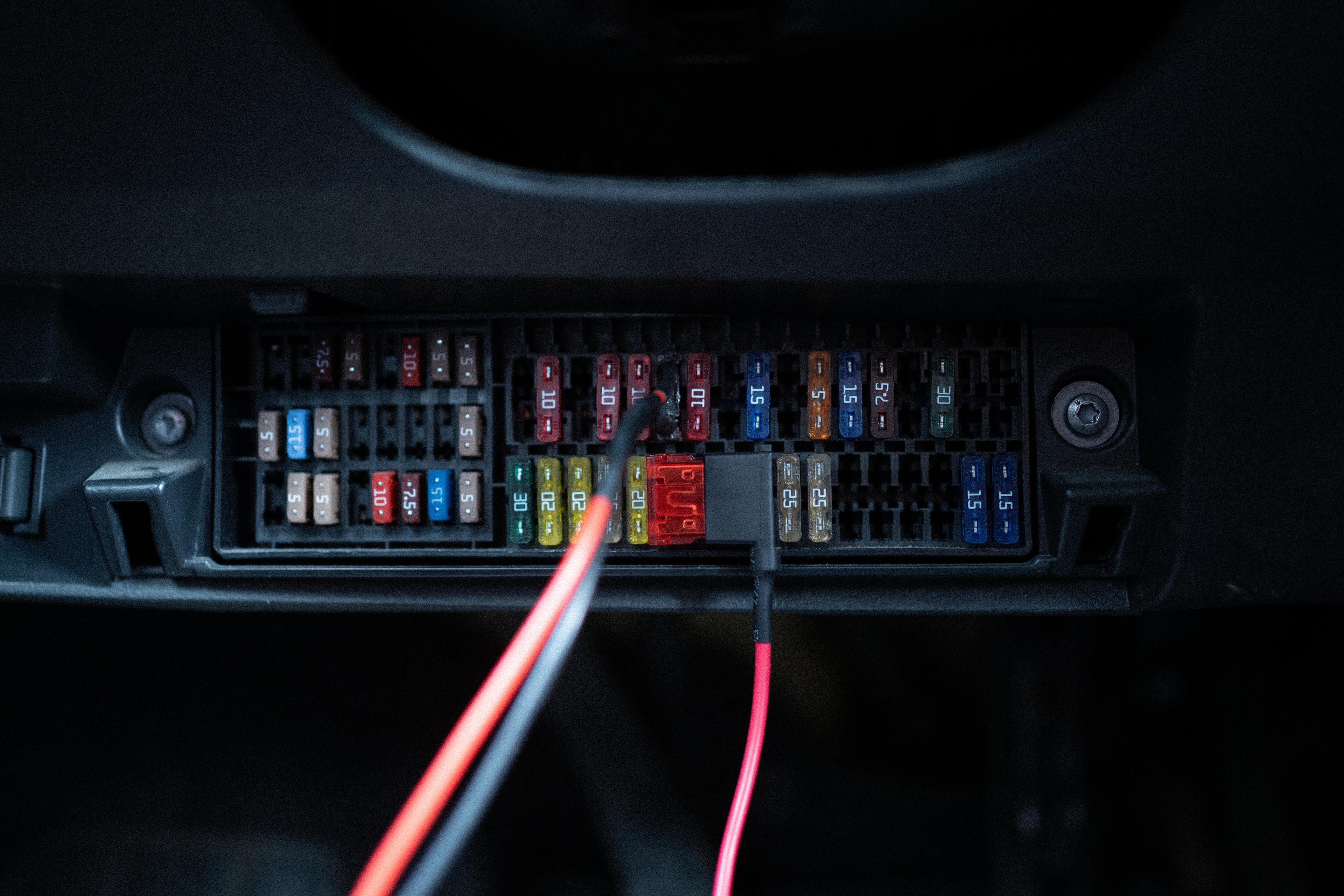
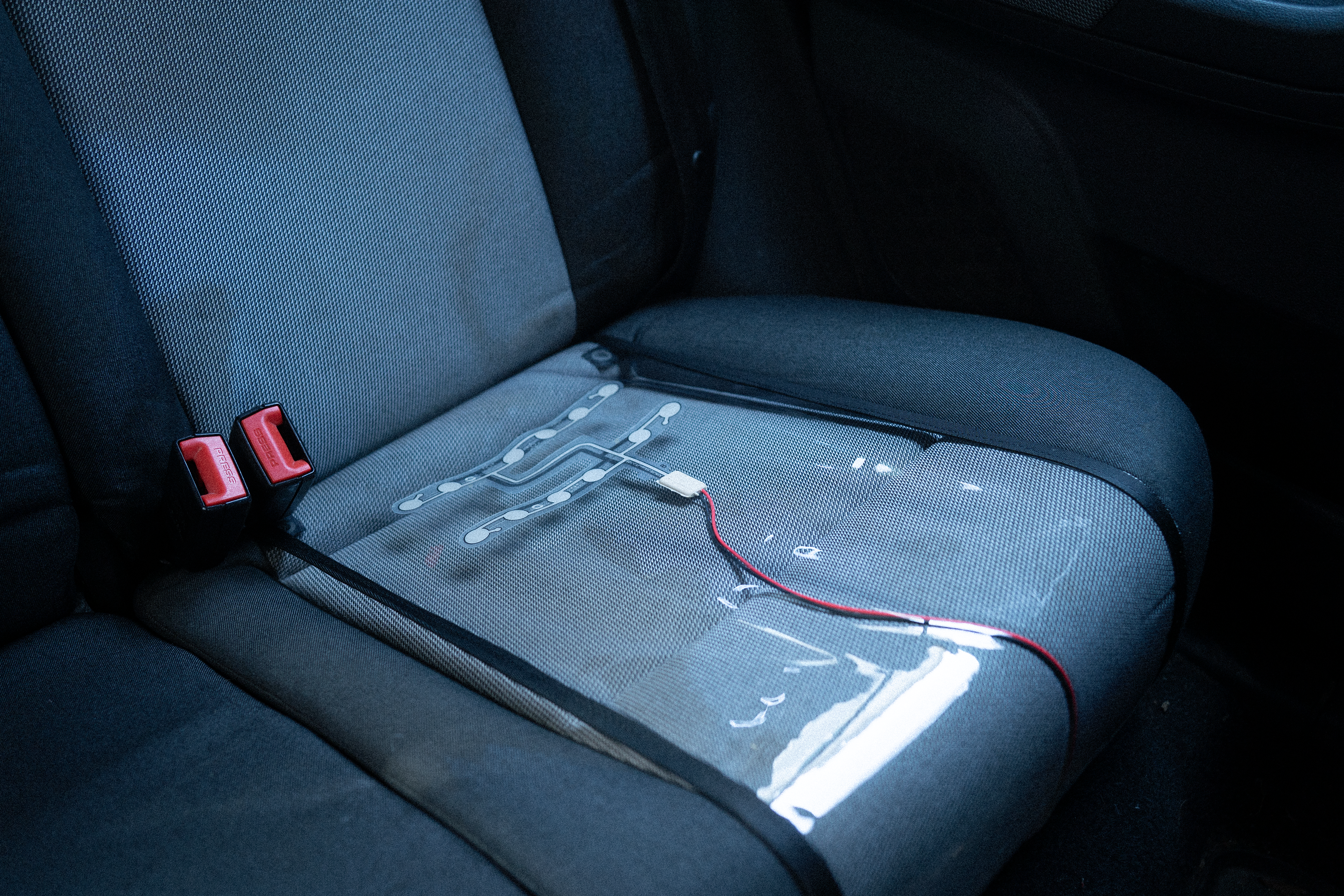
Through a process of infrastructural hacking, I rewired the ignition system of my Skoda and connected its seat sensors to an Arduino and a fuse. The engine now only starts when at least three people are seated inside. A feature originally designed for comfort becomes a condition for cooperation.
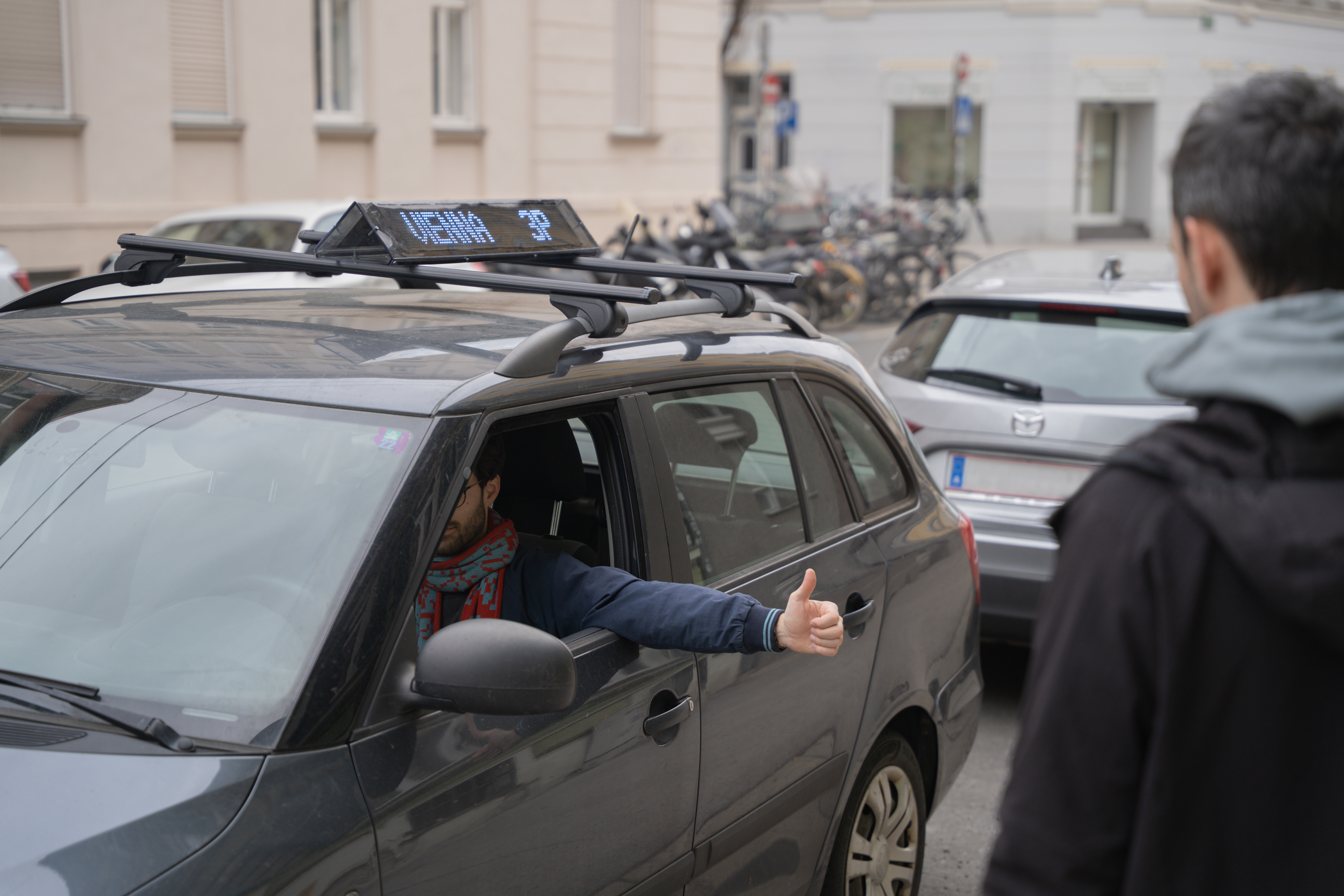
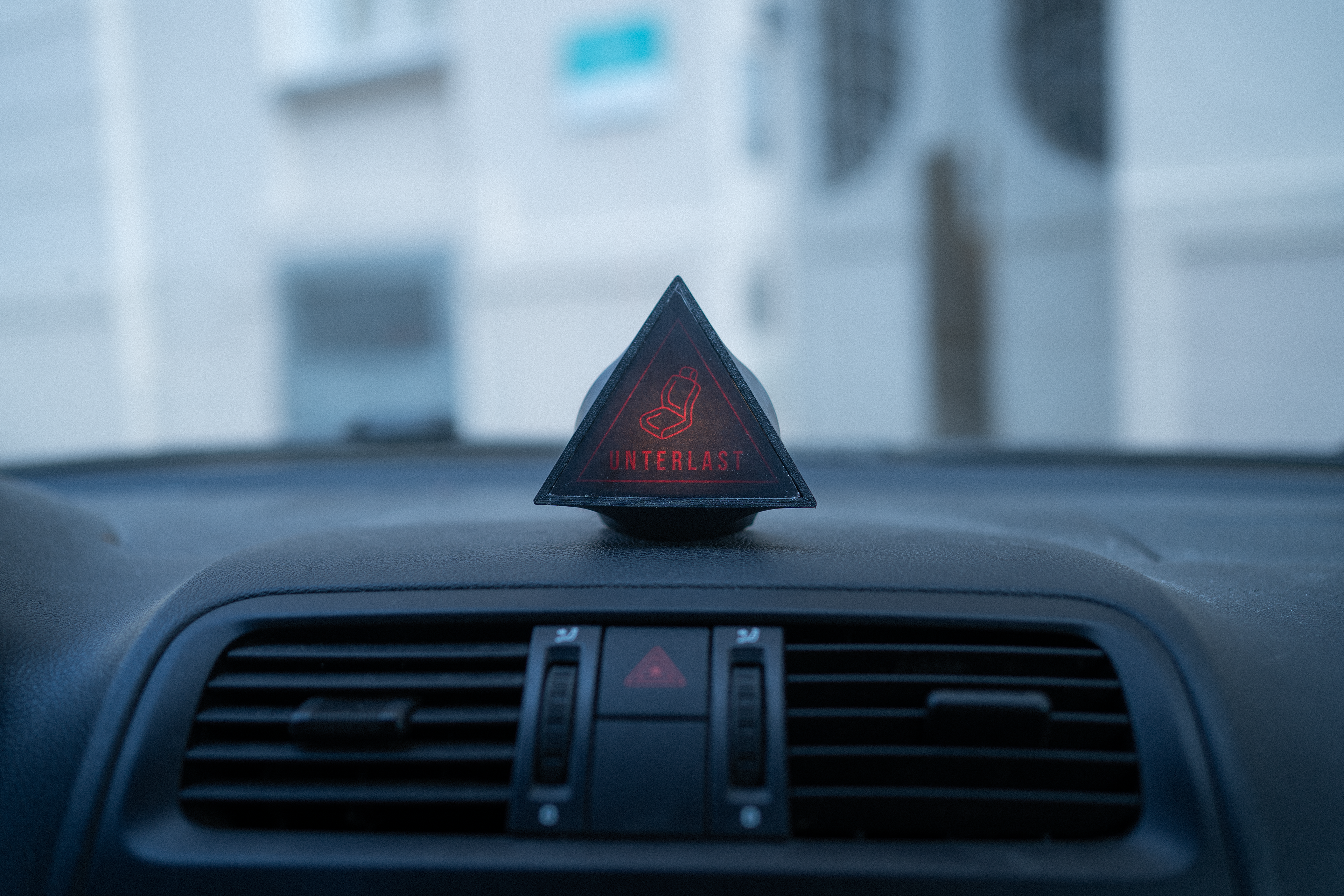
On the roof, an LED panel displays the intended travel destination, turning a private route into public information. Seeing this raises a simple question: where are all the other cars going, and how many people are inside them? In the car, a small illuminated sign reading “UNTERLAST” indicates when the vehicle is underloaded. If there are too few passengers, the ignition remains locked. Conversation becomes a prerequisite for mobility.
Omnicar is not a mobility service and not a prohibition. It is an interactive intervention into the operational logic of the automobile itself—an attempt to unlearn habits shaped by petro-modernity and relearn sharing where sharing is actually possible. What currently exists as a prototype could evolve into a simple upgrade kit: a minimal technical modification capable of reshaping everyday mobility from within.
Our mobility problem is not only an energy crisis — it is also a sharing crisis.